Comprehending Court Reporting: An Introduction of Its Function in the Legal Process
Court reporting is a crucial part of the legal system. It assures that every spoken word during tests and depositions is accurately transcribed. This transcription gives a trustworthy document for future reference. Court press reporters have specialized abilities and have to browse various technologies. durham court reporting. As the lawful landscape develops, so too does the function of these experts. Comprehending their influence elevates important inquiries concerning the future of lawful paperwork and accountability
The Importance of Accurate Transcription in Lawful Proceedings

Precise transcription plays an important function in lawful procedures, functioning as the foundation for justice and accountability. Stenotype reporter, charged with capturing talked dialogue during trials and depositions, guarantee that every word is documented with accuracy. This transcription becomes a vital record, enabling courts, courts, and attorneys to assess the procedures accurately. Errors or omissions in transcription can lead to misunderstandings, misconceptions, and possibly unjust results.
Additionally, these records serve as main documents that can be referenced in future lawsuits, appeals, or scholarly evaluations. The honesty of the judicial process relies heavily on the reliability of these files. The capability to provide a clear, verbatim account of testaments and debates is indispensable in supporting the guideline of legislation. As a result, the significance of precise transcription can not be overstated; it is important for guaranteeing fair tests and maintaining public rely on the lawful system.
The Skills and Certifications of Court Reporters
While the role of a court reporter is crucial in the lawful system, it needs a special set of credentials and skills to assure reliable performance. Proficiency in shorthand or voice writing is required, making it possible for press reporters to capture spoken language precisely and successfully. Furthermore, a solid understanding of legal terms and procedures is very important, as court press reporters should comprehend complex conversations that happen during hearings and trials.
In addition, focus to information and exceptional paying attention skills are necessary to assure accurate records. Many stenotype reporter have qualification from certified programs, which typically consist of extensive training in transcription methods and lawful principles. Strong interpersonal abilities also play a significant role, as press reporters frequently engage with witnesses, lawyers, and courts. Ultimately, the combination of technical effectiveness, legal expertise, and interpersonal capabilities equips court press reporters to satisfy their responsibilities properly within the judicial system
Various Kinds Of Court Reporting Solutions
Court reporting services include a selection of specific features customized to satisfy the demands of the legal system. One popular type is deposition reporting, where court press reporters record witness testaments beyond court setups, typically for use in tests. An additional solution is real-time reporting, which gives immediate transcription throughout proceedings, allowing attorneys to access live text feeds. In addition, some stenotype reporter offer transcription of audio and video recordings, making certain precise documents of occasions.
Closed captioning services are likewise given, decriminalizing proceedings accessible to people with hearing impairments. Furthermore, numerous court reporting firms focus on offering particular lawful fields, such as family members regulation, criminal regulation, or corporate regulation, thus offering customized experience. Lastly, some reporters might supply video clip deposition services, which boost the documentation procedure with visual context. Each kind of service plays an important duty in making certain the precision and honesty of legal documents.
The Modern Technology Behind Modern Court Reporting
Modern court reporting relies heavily on innovative innovation to boost accuracy and effectiveness. Stenography machines, digital recording strategies, and real-time transcription software application are essential elements of this area. These tools not just facilitate the transcription process however also ensure that lawful proceedings are recorded with accuracy.
Stenography Machines Explained
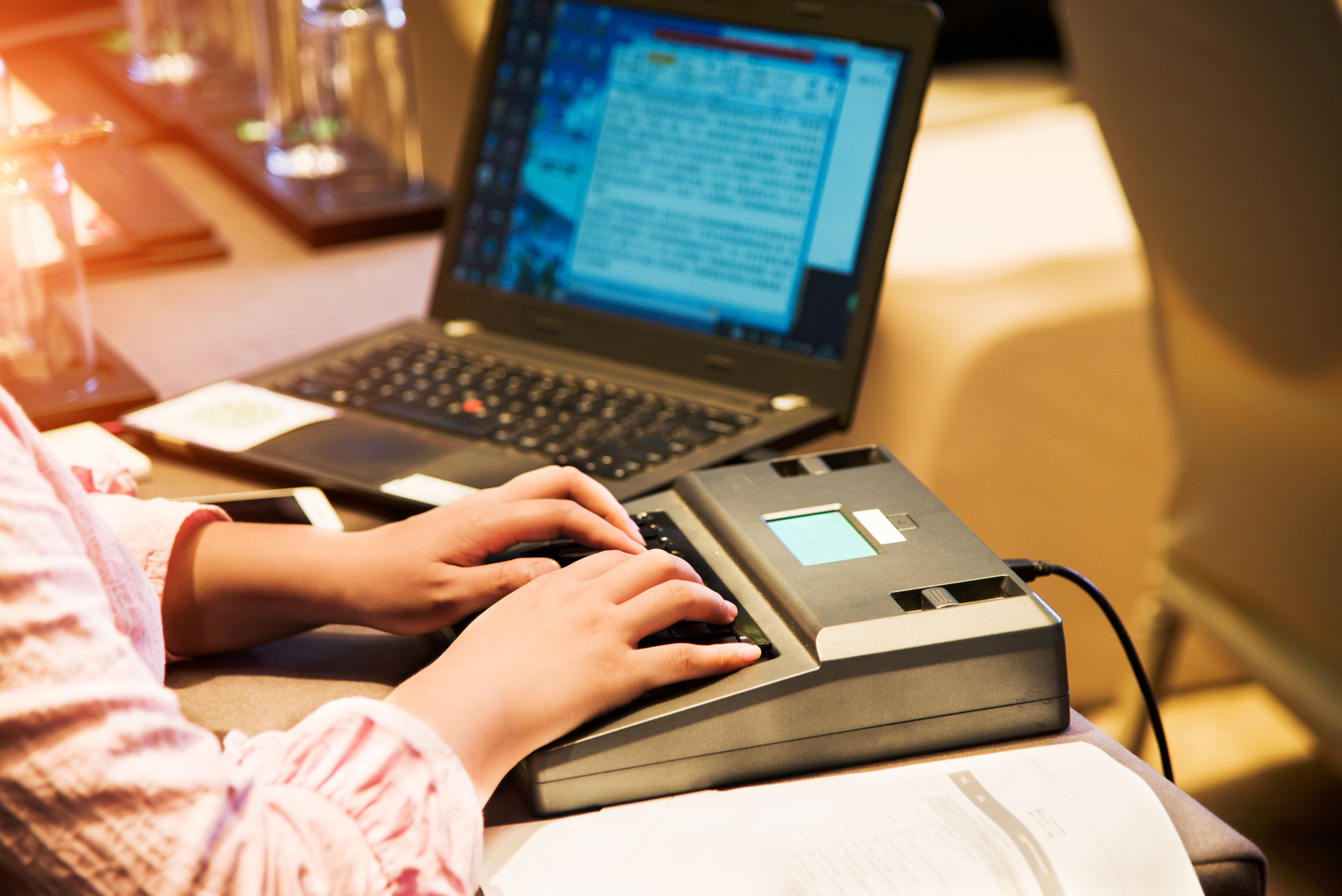
Stenography machines work as the foundation of contemporary court reporting, transforming talked words right into composed text with remarkable performance. These specialized devices utilize a special keyboard layout that enables stenotype reporter to type syllables and words phonetically, allowing them to record dialogue at broadband. Making use of shorthand signs means that reporters can transcribe conversations in genuine time, making certain exact records of legal process. Stenography makers are geared up with innovative innovation, including software application that can translate stenographic notes into readable text. This assimilation of software and hardware significantly enhances the speed and precision of court reporting, making it an essential tool in the lawful area. Therefore, stenography remains a vital ability for specialists in the court room.
Digital Recording Techniques
Innovations in innovation have broadened the devices readily available for court reporting beyond conventional stenography machines. Digital taping strategies have actually arised as a reliable option, recording audio and video of legal process with high integrity. These systems use microphones and taping gadgets tactically put to ensure clearness and decrease history noise, providing a comprehensive record of testimonies and conversations. The taped material can be played back for precision throughout transcription, enabling court reporters to confirm details effectively. Furthermore, digital recordings can be stored securely for future referral, enhancing ease of access and preserving the click stability of the legal process. As courts welcome these modern innovations, digital recording techniques play a significantly vital role in maintaining accurate and effective paperwork.
Real-Time Transcription Software Program
As courtrooms progressively adopt innovation to enhance the lawful process, real-time transcription software program has come to be a necessary tool for court reporters. This ingenious innovation allows court press reporters to transcribe talked discussion instantaneously, offering prompt access to exact records during proceedings. By converting spoken words into message as they are talked, real-time transcription software helps with effective interaction between attorneys, courts, and various other court individuals. The software program typically integrates with court audio systems, making certain that every word is recorded with accuracy. In addition, it can create records for evaluation and circulation, simplifying the documentation process. Consequently, real-time transcription software not just improves the efficiency of court reporting however also improves the total accessibility of lawful proceedings.
The Duty of Court Reporters in Maintaining Court Room Honesty

Additionally, stenotype Full Report reporter add to the transparency of the judicial procedure. By supplying thorough records, they enable the public and media to accessibility court proceedings, promoting liability. Their existence in the court room additionally aids preserve decorum, as their activities highlight the severity of the legal process.
In addition to technological skills, court reporters need to show expertise and impartiality, necessary for protecting the honesty of the judicial system. Ultimately, their thorough efforts support reasonable test legal rights and enhance public confidence in the legal structure.
The Future of Court Reporting in an Evolving Legal Landscape
As the lawful landscape progresses, court reporting encounters considerable changes driven by technical innovations and an expanding change towards remote solutions. These growths are reshaping how court press reporters operate, influencing both the speed and precision of lawful documents. The future of this profession will likely pivot on its adaptability to these emerging trends.
Technological Developments Influencing Reporting
Various technological innovations are improving the landscape of court reporting, introducing a brand-new period of efficiency and precision. Digital videotaping systems have ended up being commonplace, permitting exact audio capture throughout procedures. These systems frequently integrate with transcription software program, facilitating faster turnaround times for records. In addition, expert system is playing a substantial duty in simplifying the transcription procedure, with speech recognition technology helping reporters in producing more exact documentation. In addition, cloud-based storage solutions enhance ease of access, making it possible for attorneys other to fetch and share records quickly. As these technologies remain to advance, they guarantee to more transform the court reporting profession, boosting the general lawful process while maintaining high requirements of expertise and stability.
Change Towards Remote Solutions
The legal landscape is significantly accepting remote services, reshaping exactly how court reporting is carried out. This change has actually been accelerated by technical advancements and the need for versatility during recent worldwide occasions. Court reporters currently use video conferencing systems to assist in depositions and hearings, permitting higher ease of access and performance. Remote solutions make it possible for participation from different areas, decreasing traveling costs and logistical challenges. Furthermore, electronic transcription tools boost accuracy and improve the documents procedure. As the lawful industry adapts, court press reporters are needed to create brand-new skills and acquaint themselves with arising technologies. This advancement provides both opportunities and challenges, pushing the career in the direction of an extra incorporated, technology-driven future while preserving its core dedication to supplying dependable and accurate lawful documents.
Frequently Asked Concerns
Exactly How Much Do Court Reporters Normally Earn Annually?
Stenotype reporter usually earn in between $50,000 and $100,000 each year, depending upon experience, location, and the demand for solutions. Specialized skills or qualifications can even more enhance their gaining possibility in numerous legal settings.
What Is the Ordinary Period of Court Reporting Training Programs?
Court reporting training programs usually last in between 18 months to 2 years. This period varies based on the establishment and the certain educational program, including both theory and functional skills necessary for striving stenotype reporter.
Can Court Reporters Job Remotely for Legal Procedures?
Yes, court press reporters can work remotely for lawful procedures, utilizing technology to record audio and video feeds. This adaptability permits them to give accurate paperwork while keeping the stability of the legal process.
What Is the Distinction In Between a Court Press Reporter and a Clerk?
A stenotype reporter focuses on transcribing legal process, while a stenographer concentrates on shorthand writing for various contexts, including conferences and conferences. Both roles entail recording spoken words but differ in their specific applications and settings.
Are Court Reporters Required to Have Certifications or Licenses?
Yes, court press reporters are normally required to get licenses or accreditations. These qualifications guarantee they have the necessary abilities and expertise to properly record legal procedures, keeping the integrity of the judicial procedure.
Several court reporters possess certification from certified programs, which often include rigorous training in transcription methods and lawful ethics. One prominent type is deposition reporting, where court press reporters record witness testaments outside of court settings, commonly for usage in tests. As courtrooms progressively embrace technology to improve the lawful process, real-time transcription software program has come to be a necessary device for court reporters. Yes, court press reporters can function remotely for legal proceedings, utilizing innovation to transcribe sound and video feeds. A court press reporter specializes in transcribing legal procedures, while a stenographer focuses on shorthand composing for various contexts, including meetings and meetings.